

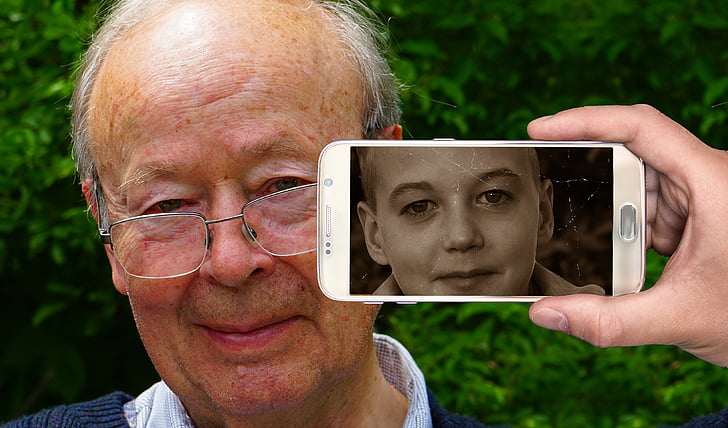
Reflection is an integral component of the human mind. We reflect on memories that make us smile, laugh, cry or regret. Some of our deepest desires and fears live in the way we reflect back on our memories in the past and they serve as an anchor for us to live in the present. They sharpen our ability to discern and trust others. They allow us to root ourselves more in empathy and compassion.
As we age, this reflection becomes more critical as we are aware of the consequences of the choices made and paths we took. It becomes even more important to recall the memories of the past with love, gratitude and sensitivity towards self and others.
According to the National Institute of Neurological Disorders and Stroke, memories are defined as the brain’s way of encoding, storing, and retrieving information. People imagine their future by recalling past experiences, selecting important events and combining them in ways that make most sense to their current state of existence. This shows that memory helps us think ahead, make decisions, solve problems, and even feel better about our lives.
However, not all memories ignite feelings of joy, solace and comfort. There are incidents we wish we could forget and experiences that we could erase. In this article, we will explore the gentle art and significance of looking back at our past memories with compassion and honoring them as we move through the later stages of life.
Cognitive Reappraisal
Cognitive reappraisal is a strategy where a person alters their emotional response associated with a past event which is upsetting or distressing. It involves consciously changing the way we think about an event or experience with the aim to alter our emotional response and ultimately improve our overall well-being.
Cognitive reappraisal is extensively used as a Cognitive Behavioral therapy (CBT). It can be done in multiple ways. One of them is shifting attention to interpretations of experiences that generate positive emotions and open a path to problem-solving. It is a skill you can build over time. By actively questioning your automatic thoughts and viewing them in a more positive or constructive way, you can open yourself up to new possibilities and create a more fulfilling life.
Exposure Therapy
Exposure therapy, a psychological intervention, is mostly used for patients who are undergoing PTSD, trauma or obsessive-compulsive disorder. As the name suggests, it entails directly facing or exposing oneself with the memory or the object, situation, or activity that the person is afraid of. It is a proven methodology that has helped in reducing and weakening the association with the memory of fear. By creating a safe environment, the person learns that the triggers are not dangerous, so anxiety is decreased through new learning.
Dual Awareness
Dual awareness is the technique where an individual is made to recall the painful past with an awareness that it is in the past and has no bearing or power over the present moment. This allows the person to stay oriented and grounded in the present moment and inner reality with focus on breath work. It is specifically helpful in staying connected to emotions without losing control and slowly builds the ability to stay anchored in the present.
An example of it could be “I remember how painful that was—and I’m sitting here, safe, right now.” Dual awareness enables compassion reflection and prevents emotional overwhelm.
Emotional Distancing
Emotional distancing is a powerful technique of removing the emotion associated with the memory or experience. It aids in creating a psychological space between the individual and the memory and is a proven emotional regulation strategy. Repeated self-distanced reflections can promote positive change in emotionality in the face of everyday adversity. Emotional experiences are powerful in a sense that they can haunt and trigger intense reactions. Therefore, distancing helps in establishing separation between past and present and encourages reflection without rumination.
Gentle/Cognitive Reframing
Gentle or cognitive reframing is a therapeutic approach where the goal is to examine and shift unhelpful patterns of thinking. It enables a shift in perspective with a learning bent of mind that centers around “What did this experience teach me?”, “What strengths came from this?”. With this therapy, an individual is able to minimize the fear or negative feelings associated with the memory and reduce the anxiety while simultaneously being able to reflect back with empathy, kindness and compassion towards self.
Reminiscing in later years in life can be a very fulfilling and enriching experience. It can be full of learning, joy and connection. It is far more than a simple act of recalling past events—it is a deeply meaningful process of reflection, connection, and emotional integration. This reflective process can bring new perspective and fosters a deeper sense of self identity, confidence and reverence for going through ups and downs in life. It also entails honoring the journey while finding solace and meaning that one did their very best and the mistakes were nothing but stepping stones. In this process, seniors can combat loneliness, regret, guilt and embrace it with a profound sense of acceptance, emotional awareness and gratitude. Reminiscing creates a bridge between past and present; softening difficult experiences and carrying forward with a deeper sense of peace, meaning, and self-understanding.
Sources
- Researchers uncover how the human brain separates, stores, and retrieves memories
- Memory and connection: Remembering the past and imagining the future in individuals, groups, and cultures
- Cognitive Reappraisal
- Cognitive Reframing: Unlocking Positive Perspectives
- Exposure therapy: What is it and how can it help?
- What Is Exposure Therapy? How It Can Help Anxiety Disorders
- Dual Awareness
- Dual Awareness – The Body Has a Story to Tell
- Spatial distancing reduces emotional arousal to reactivated memories
- Self-distancing promotes positive emotional change after adversity: Evidence from a micro-longitudinal field experiment
- Cognitive Restructuring: The Power of Reframing Thoughts