

Consider two photographs of the same person: one taken at one year old and another at seventy. Physically, almost everything about them has changed. The body has grown, cells have been replaced, and the person in the later photograph possesses thoughts, relationships, preferences, and memories that the infant did not yet have. Yet intuitively, we view both photographs as depicting the same person. What, then, creates this continuity of the self across time?
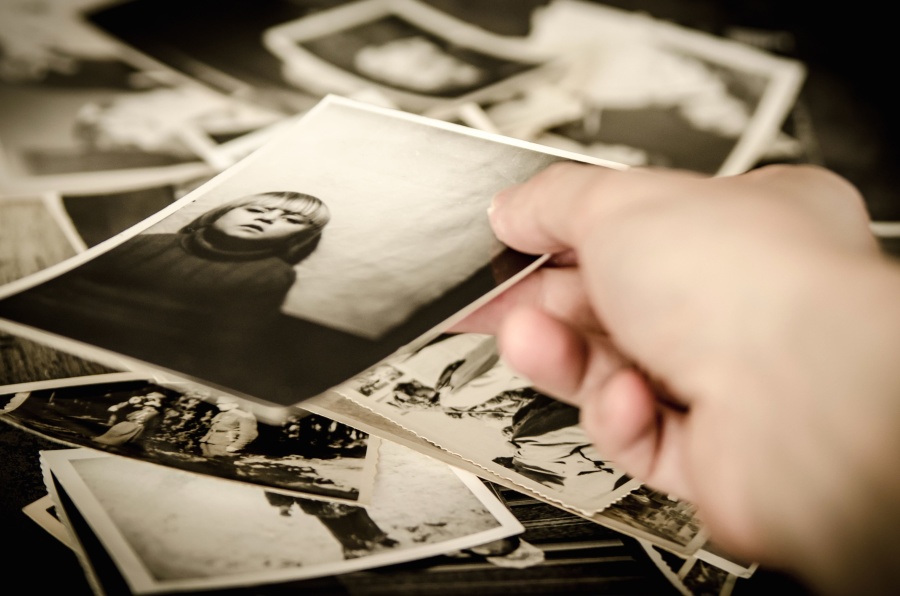
This question becomes especially poignant when considered through the psychology of memory. Memory helps connect our past and present selves. But what happens when those memories begin to fade due to Alzheimer’s disease or another form of dementia? Autobiographical memories may become fragmented or inaccessible. A person may forget where they grew up, details of a family vacation, or eventually even the name of someone they have loved for decades. If identity depends upon psychological continuity, does losing these memories mean losing part of oneself?
The relationship between memory and identity suggests that the answer is far more complicated than a simple yes or no. The self can be understood as an ongoing psychological process constructed through interactions among memory, emotion, and life experiences. Memory loss may therefore change how a person accesses and expresses their identity without necessarily eliminating the person who possesses it. Dementia creates an especially important challenge to philosophical theories of personal identity because it forces us to distinguish between remembering one’s past and continuing to psychologically experience life.
To determine what constitutes the self, we must first consider what cannot sufficiently define it. Anyone who has studied philosophy has likely heard of the Ship of Theseus, which provides one way of examining the limits of a purely material understanding of identity. In this thought experiment, the planks of Theseus’s ship are gradually replaced until none of its original material remains. If the discarded planks were then reconstructed into another ship, which would be the original Ship of Theseus? This problem raises a fundamental question: does identity depend upon retaining the same physical matter?
Thomas Hobbes considered identity partly through material continuity. Yet applying strict material continuity to human beings creates an immediate problem: human bodies undergo continuous physical change. The human body at seventy is not composed of precisely the same material as the body at age seven or twenty-one. While we do not tend to think of ourselves as a completely different person at seventy, physical continuity alone seems insufficient to explain psychological identity.
This distinction becomes especially visible in dementia. A person with Alzheimer’s may remain physically recognizable while undergoing profound psychological changes. Their body may appear largely unchanged, but their memories, language, preferences, or behavior change. If physical continuity alone defined personal identity, these psychological changes would be irrelevant. Yet families experiencing dementia often describe precisely the opposite problem: their loved one is physically present, but aspects of the person they remember seem difficult to access. Dementia therefore demonstrates that understanding the human person requires looking beyond the persistence of a living body.
John Locke offered a competing alternative by connecting personal identity to consciousness and memory. Locke described the mind at birth as a tabula rasa (blank slate) that is shaped through sensation and experience. Under this view, experience provides the foundation from which an individual’s psychological self develops. Memories then allow these experiences to become connected across time.
Psychology provides an important extension of this idea. Memory is not simply a mental archive where facts are perfectly recorded and stored; human memory is constructive. We reconstruct our past through what we remember, meaning that recalling the past involves reconstructing rather than simply replaying it. Our autobiographical memories—the memories we possess about our own lives—are exceptionally important to identity because they allow us to construct a narrative about who we are. I am not only the person experiencing the present moment; I understand myself as someone with a past.
This makes memory an attractive foundation for psychological continuity. One’s seventy-year-old self does not need to possess the same body or beliefs as their one-year-old self; instead, there is a continuous psychological process connecting those experiences across time. Memories are stored, retrieved, and reinterpreted over a lifetime, and these new experiences become incorporated into the developing self.
Dementia, however, creates a serious challenge for this theory. Alzheimer’s disease commonly disrupts episodic memory, which is the ability to consciously recollect particular experiences situated in a specific time and place. A person may know that they are married, yet struggle to recollect their wedding day. Or they may lose access to deeply significant personal milestones. If Locke is correct that personal identity depends upon psychological continuity through memory, progressive memory loss seems to lead to a disturbing conclusion: does a person with dementia become less of themselves as their memories disappear?
Thomas Reid’s famous objection to Locke becomes particularly revealing here. Reid argued that memory cannot be a strict requirement for identity because people forget. If an elderly person remembers being a general, and the middle-aged general remembers being a child, but the elderly person can no longer remember being a child, Locke’s theory creates a paradox. Reid argued that forgetting an experience does not mean that one did not experience it, nor does it mean the person is no longer the same self.
Psychologically, Reid’s perspective becomes even more powerful because memory exists in multiple forms. A person does not need to consciously retrieve an autobiographical event for that event to have shaped who they are. Experiences can shape expectations, emotional responses, habits, relationships, and behavior even when the specific event itself can no longer be consciously recalled.
Research involving people with Alzheimer’s disease illustrates this distinction particularly well. A study by Guzman-Velez, Feinstein, and Tranel (2014) showed participants with Alzheimer’s film clips designed to produce happiness or sadness. Although the participants rapidly forgot the details of what they had watched, the emotional states provoked by the films persisted. Some participants retained very little memory of what had caused their emotion while continuing to experience the emotion itself. This creates a vital insight: a person can forget what happened without immediately losing how an experience made them feel.
Imagine, for example, that a daughter spends an afternoon with her mother who has Alzheimer’s disease. They listen to music, look through photographs, and laugh together. Later, her mother may be unable to remember that the visit occurred. From a strict narrative-based interpretation of memory-based identity, the visit appears to have disappeared from the continuity of her mother’s explicit memory. Psychologically, however, that conclusion is incomplete. Her mother may retain a positive emotional state even after losing the episodic memory responsible for it. The factual narrative of her daughter’s visit may disappear while feelings of comfort, familiarity, or safety remain.
This suggests that the self cannot be reduced entirely to the autobiographical memories a person can consciously retrieve. Rather, identity operates across multiple psychological levels. There are the facts and narratives we consciously recall, but there is also the underlying psychological self that responds emotionally and perceptually to the world.
Dementia can profoundly disrupt the narrative self; someone may lose the ability to place themselves within the chronological story of their life. Yet disruption of that narrative does not necessarily mean that every component of selfhood has disappeared. Research examining identity in dementia has found evidence that aspects of self can persist even as autobiographical memory deteriorates (Caddell & Clare, 2010). Familiarity, emotional bonds, preferences, embodied habits, and interpersonal responses may continue to express aspects of an individual’s psychological history.
This provides a more balanced answer to the question: when memories change, does the person change? In some ways, yes; identity is partly constructed through memory, so significant alterations to memory can alter the way a person understands and expresses themselves. Memory loss from dementia should not be romanticized—it brings real loss, and changing experiences can alter one’s ability to understand their past, recognize relationships, and construct a continuous narrative of themselves.
However, change is not equivalent to disappearance. It is a mistake to assume that when one component of psychological continuity declines, the entire self has ceased to exist. A person with dementia may no longer be able to say, “You are my daughter,” or remember raising her, while still experiencing deep comfort and warmth when that daughter enters the room. They may not remember why a particular song matters, but can still feel moved when hearing it.
This has implications extending far beyond philosophy. It changes how families and caregivers might understand interactions with people living with dementia. Family members may understandably wonder whether spending time together matters if their loved one will soon forget that the visit happened. Yet this hesitation assumes that an experience only carries value if it becomes an accessible episodic memory. If the psychology of memory demonstrates that emotional and psychological effects can persist without explicit recollection, then a positive visit matters deeply even when its details are forgotten. Conversely, distressing actions matter even when someone cannot later explain why they feel sad. The psychological experience of a person with dementia therefore deserves attention independently of what they can later consciously recall.
Returning to the example of the two photographs: one is psychologically very different as a child pictured beside their seventy-year-old self. They likely cannot remember most of what they experienced as an infant. Yet those forgotten experiences were not meaningless; they contributed to language learning, emotional development, relationships, and habits which subsequently shaped everything that followed. One’s identity is not simply a collection of memories that can currently be retrieved, but is the product of an entire psychological history—including experiences that may have been forgotten.
Locke was correct to maintain that psychological continuity is fundamental to personal identity, and Reid correctly identified the problem with making conscious recollection itself the sole requirement for remaining the same person. Modern psychological research allows these perspectives to be reconciled. Memory contributes significantly to the self by connecting our past to our present narrative. However, human psychological continuity extends far beyond explicit memory.
Memory shapes who we are, gives experiences significance, and directly influences how a person encounters the world in the next moment. Dementia alters this process and profoundly affects parts of identity, but alteration should not automatically be equated with complete loss. Perhaps the most important question, then, is not simply whether a person with dementia still remembers who they were, but whether our definition of personhood is broad enough to recognize the forms of selfhood that remain when autobiographical memory changes.
A person may forget the story of a relationship while continuing to experience its emotional significance. They may lose the ability to describe parts of their past while continuing to form responses, hold preferences, and express feelings in the present. When memories change, the self may change with them—but changing is not the same as disappearing.
Sources:
- The Impact of Dementia on Self and Identity: A Systematic Review | Clinical Psychology Review
- Feelings Without Memory in Alzheimer Disease | Cognitive and Behavioral Neurology
- John Locke on Personal Identity | National Library of Medicine
- Thomas Hobbes and Thomas White on Identity and Discontinuous Existence | PhilArchive
- Form vs. Matter | Stanford Encyclopedia of Philosophy
- Locke on Persons and Personal Identity | JSTOR
- Aristotle on Causality | Stanford Encyclopedia of Philosophy
- Thomas Reid: Philosophy of Mind | Internet Encyclopedia of Philosophy
- Same-Kind Coincidence and the Ship of Theseus | JSTOR
- Locke on Real Essence | Stanford Encyclopedia of Philosophy
- Personal Identity | Internet Encyclopedia of Philosophy
- Ship of Theseus | Philosophical Thought
- Personal Identity | Stanford Encyclopedia of Philosophy