

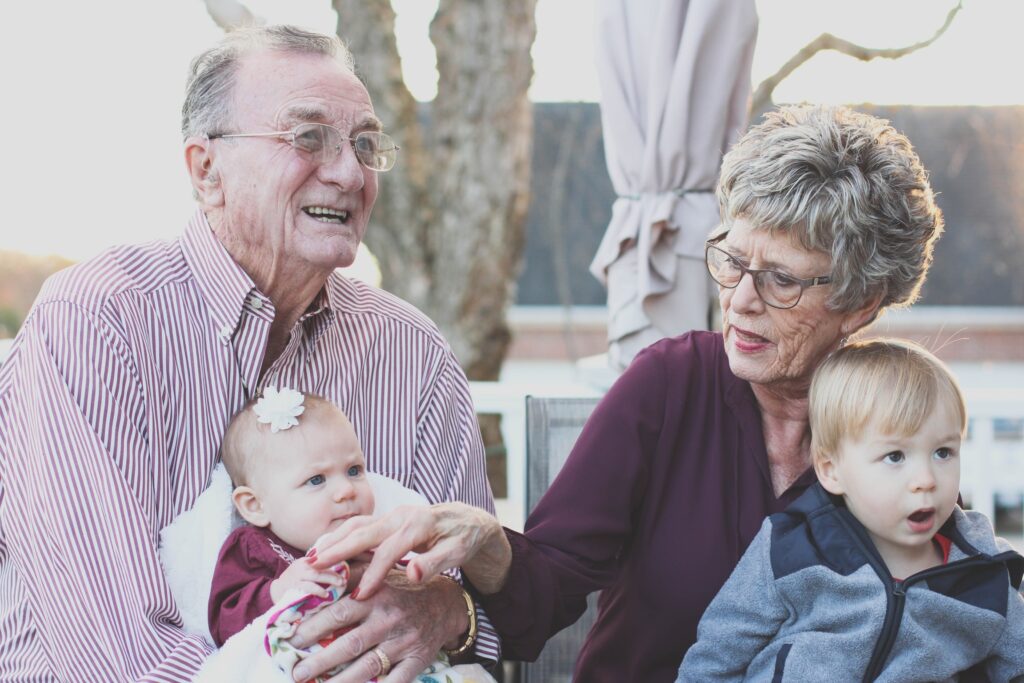
Understanding the Grandparent Effect
When people talk about child development, the focus usually stays on parents, schools, maybe peers. Grandparents are there, but often treated as secondary figures, more sentimental than influential. That assumption does not quite hold up when you look at how these relationships function over time.
The “grandparent effect” refers to the ways older adults influence younger generations, not only emotionally but also socially and cognitively. It is not always obvious. Grandparents are not usually responsible for daily structure, so their impact can feel less direct. Still, their presence shapes children’s understanding of relationships, problem-solving, and their identity in ways that are not always easy to measure.
There is also a timing element. Grandparents often interact with children at a stage when they themselves are no longer raising children full-time. That shift creates a different kind of relationship, one with less urgency and more room for conversation that is not tied to immediate responsibilities.
Where This Influence Might Come From
Researchers sometimes explain this role through the “grandmother hypothesis.” The idea is that in earlier human societies, older adults who lived beyond their childbearing years contributed to family survival by helping care for grandchildren. This support allowed younger adults to focus on other responsibilities.
What matters here is not just the caregiving, but what it suggests about aging. If older adults were consistently involved in supporting younger generations, then maintaining physical and cognitive function into later life had a clear purpose. Aging was not about decline, but about continued participation, even if in a different role.
Today, that role looks different, but the structure remains. Older adults still contribute knowledge, stability, and perspective. It is less about survival now and more about continuity.
Educational and Developmental Influence
Grandparents can also affect outcomes like education, though not in a uniform way. Studies comparing different countries show that their influence varies depending on context, including family structure and access to resources. What appears more consistent is that grandparents become more important when parents face limitations. In these cases, they may help reinforce expectations around school or provide a stable environment that supports learning.
There is also a less measurable influence. Grandparents bring different experiences of education and work, and sharing those perspectives can shape how younger people think about their own goals. This influence is often subtle, but it tends to accumulate over time.
Emotional and Social Development
The emotional side of the relationship tends to be more consistent. Children who maintain close relationships with grandparents often show stronger emotional regulation and social skills. Part of this comes from the different role grandparents occupy. They are usually not responsible for discipline in the same way parents are, which allows interactions to feel less pressured. Conversations can be less structured, and there is often more patience in these exchanges.
Grandparents also pass down family history, helping children connect to a broader sense of identity. These stories, even when informal, shape how children understand where they come from.
At the same time, the relationship is not always simple. Differences in expectations or parenting styles can create tension. Too little involvement weakens the bond, while too much can blur boundaries. Finding a balance is important, though not always straightforward.
Effects on Older Adults
The relationship also affects grandparents themselves. Spending time with younger generations can support cognitive engagement, reduce isolation, and provide a sense of purpose.
There is often a shift in identity as well. Grandparenting is connected to parenting but comes with fewer daily responsibilities. Some describe it as more flexible, though it still requires adjustment.
Grandchildren also introduce new ideas and perspectives, which can be stimulating. The relationship tends to be reciprocal, even if not in the same way.
Everyday Interaction and Lasting Impact
The grandparent effect is rarely about one specific action. It develops through repeated, everyday interactions. Small moments, like conversations or shared activities, build over time.
Even when distance is a factor, families often maintain these connections through calls or visits. The relationship adapts rather than disappears.
In the end, the role of grandparents is not easily defined. It exists somewhere between support system, storyteller, and advisor. These influences are not always obvious in the moment, but they tend to appear later in how individuals think, relate to others, and make decisions.
Sources:
- The Grandmother Effect: Implications for Studies on Aging and Cognition | National Library of Medicine
- The grandparent effect | Catholic Sun
- The grandparent effect | Long run Wealth
- The ‘Grandparent Effect’: How Senior Wisdom Shapes Young Minds | The Goodman Group
- The “Grandparent Effect” on Education | Share