

We live in a day and age that is largely defined by materialism and consumerism. Where success is measured by owning beautiful, expensive things, relationships by digital followers and likes, happiness by exotic vacations, and conversations being replaced by screentime. The hustle has become a norm, abundance – a necessity, chase – a thrill and yet there still remains unfilled voids.
While a majority of our lives is spent in building our careers and establishing financial security, a recent study by Deloitte in 2024 reveals that purpose happens to be a key factor in driving job satisfaction. However, what happens when retirement hits and marks the end of almost a four-decade long career? How can one instill meaning, purpose, and joy in their daily experiences and find richness, alignment, and enthusiasm?
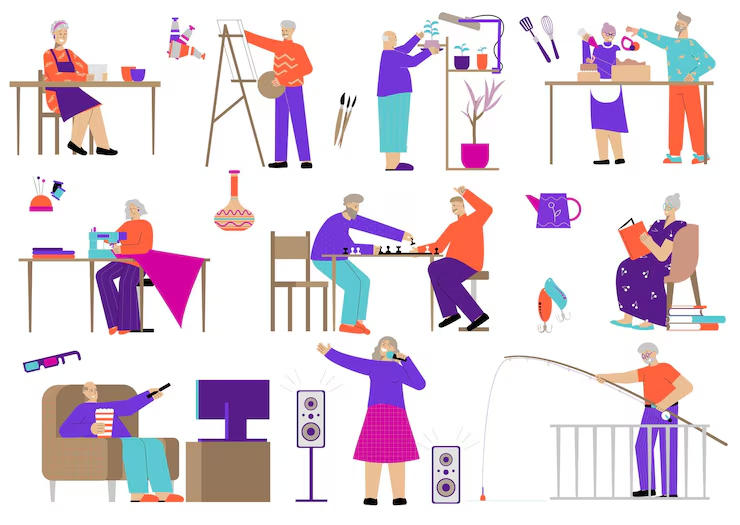
Rediscovering passions can be a very meaningful and enriching experience, especially when the busyness slows down, responsibilities are taken care of, and the focus turns more inward. Following are some ways to recharge our inner compass and fuel ourselves to feed our longing:
- It’s not about finding, but remembering who you truly are: Many people make the mistake of looking outward and seeking extrinsic motivation to see what they would like to do, when a simple inward reflection can take them back to who they truly were, what they loved doing, and what feels like home. This exploration phase requires they understand and introspect about what they loved and enjoyed doing in their earlier years – something that remained dormant and is now waiting to be reignited.
- Cultivating Social Connections: Once the exploration phase passes and the hobby emerges, it is beneficial to build a network and cultivate new connections with people who have shared interests. One of the ways this could be done is through social media sites where local community groups are present for every common area of interest. In addition to this, attending events, coffee chats, and cultural activities hosted by public libraries and community groups can also be leveraged.
- Leaving a Legacy: Another exercise that can be useful in discovering passions is to consider what legacy or impact the person would like to leave in the world. It could be as simple as teaching what they love doing, having meaningful conversations through social clubs and meetup groups, starting a book club, or initiating a project for a meaningful cause they feel strongly about. Thinking about what change they’d like to create and embodying it can be a great anchor for a hobby/passion.
- Volunteering: Another great way to nurture old passions and hobbies is to try volunteering. Volunteering helps to rebuild a sense of purpose and replace older workplace connections. Some organizations to explore volunteering activities are AmeriCorps Seniors, AARP Foundation, Meals on the Wheels America, and Senior Corps. These organizations offer inclusive programs that are specifically designed to cater to senior citizens to enable them to share their skills, knowledge, expertise, and lifetime experience.
- Starting Small: It can be extremely daunting to embrace newer hobbies or rekindle joys and passions when a majority of one’s lifetime has been spent taking care of their home, career and responsibilities. Such shifts are crucial and need gentleness and taking one day at a time. Setting up smaller goals on a weekly basis can help break down a larger task and vision while paving the way for smaller victories. For example, if the passion for guitar needs to be rekindled, then it could be broken down into smaller goals like taking a beginner lesson, practicing 10 minutes each day, and watching videos of great artists on a weekly basis. Consistency builds routine and takes away the mental pressure from unrealistic goals.
- Taking a Class: One of the most powerful ways of finding a passion or hobby is taking new classes to see if they spark an interest. Research studies have revealed that learning anything new improves cognitive function, regulates blood flow, and fosters emotional harmony. Consider taking community classes or online learning.
- Shifting from doing to being: Any good exercise or hobby when done with consistency and routine brings a shift in the state that we live in on a day-to-day basis. While each of us is constantly finishing tasks and chores, real-life passion brings people instantly to the present moment, shifting the mental/emotional state from doing to being. It is imperative to remember this distinction, as one may get the thrill of doing anything new for some time, but while rediscovering a passion, the steadiness and inner stillness are more often a sign of true love that needs to be nurtured.
Rediscovering passions at a later stage in life and nurturing them can be a deeply fulfilling and rewarding experience. It enhances mental stimulation, social interaction, skill building, and fosters creativity and connection. Many senior living communities have also integrated lifelong learning and volunteering programs to enhance the wellness of their residents. Letting passions evolve invites growth, enrichment, and fills up spaces yearning for meaning and momentum.
Sources:
- Deloitte’s 2024 Gen Z and Millennial Survey finds these generations stay true to their values as they navigate a rapidly changing world
- Rediscover Hidden Passions: Finding Joy in Your Third Act
- Rediscovering Artistic Passions in Your Golden Years
- Tips to Help Seniors Find New Hobbies
- Seniors Blue Book- Resources for Aging well
- Lifelong Learning- Why More seniors are returning to campus
- 9 Ways to Find your Purpose as you age