

The Unethical Retrieval of Henrietta Lacks’s Cells
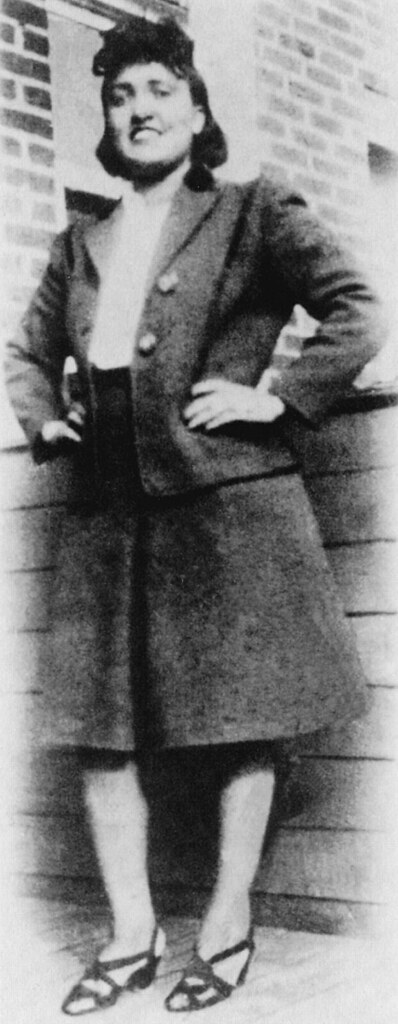
In 1951, Henrietta Lacks was admitted to Johns Hopkins Hospital because she was experiencing vaginal bleeding. She was a 31-year-old woman from Virginia and a mother of five children. During this racially segregated time, Johns Hopkins was one of the few hospitals in Baltimore that treated Black patients from low socioeconomic backgrounds. Lacks was treated by Dr. Howard Jones, a gynecologist who found a malignant tumor on her cervix caused by the human papillomavirus (HPV). She was suffering from a high-risk, aggressive strain called HPV-18.
As a result, Lacks underwent radium treatment, and a sample of her cancer and healthy cells from a biopsy was sent to Dr. George Gey, the head of the Tissue Culture Research department at Johns Hopkins. This was done without Lacks’s consent or knowledge. In other words, the people she put her trust in to treat and care for her did not debrief her on what they planned to do with her cells. Lacks was not alone in this ethical violation; it was common practice for physicians at the time to send patients’ cells to a lab without their knowledge or approval. After analyzing her cancer cells, Gey found that Lacks’s cells did not die, unlike those of other patients he analyzed. Instead, her cells doubled in number every 20 to 24 hours. Simply put, they divide indefinitely, can survive outside the human body, and do not undergo regular cell death (apoptosis) under controlled laboratory conditions. Ultimately, Lacks’s cells were classified as “immortal cells.”
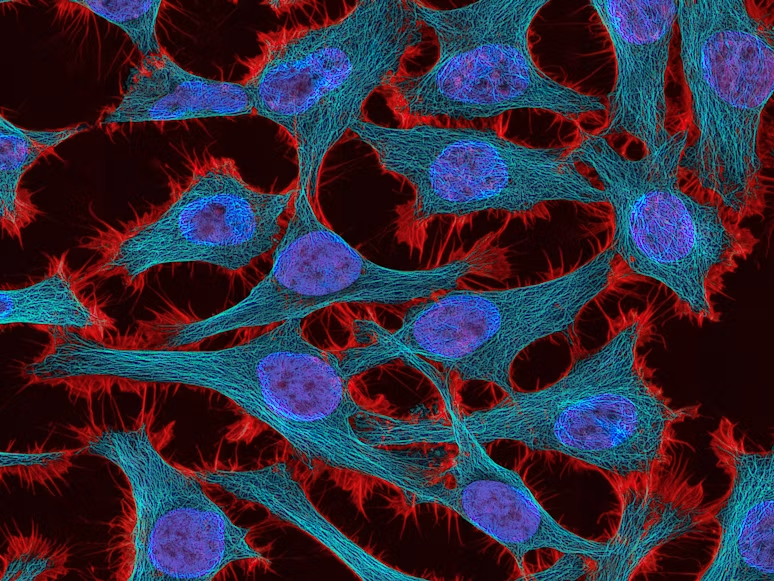
Today, these cells are called “HeLa cells,” named after the first two letters of Henrietta Lacks’s first and last name. They rapidly divide and behave as aggressive cancerous cells. For that reason, they are often used to study the effects of drugs, toxins, and viruses on cancer cells without having to experiment on humans. HeLa cells have also been used to study and pioneer early gene mapping, to understand viruses and infections (such as salmonella and tuberculosis), and to help develop various vaccinations, including the polio, HPV, and COVID-19 vaccines. That is why people commonly say that Henrietta Lacks’s cells are in everyone, further demonstrating how important and influential they are.
Despite their advantages, the way HeLa cells were retrieved was completely unethical, especially since Lacks was never provided with informed consent. She died from her condition in 1951, never knowing how impactful her cells would become. Her privacy and personal interests as a patient were not prioritized, and her cells were freely dispersed to researchers across the globe. In fact, her family was not aware of this until the mid-1970s, when researchers began using her cells for genetic testing. By then, her cells were already commercialized, distributed worldwide, and used in multiple studies. All of this happened while Lacks was buried in an unmarked grave and her family struggled financially without health insurance, showcasing the deep racial and ethical disparities in medical research. Scientists and research institutions profited immensely from HeLa cells, generating billions of dollars, while her family received absolutely no compensation. It is important to note that these actions are a clear historical example of inhumane treatment against a patient.
In 2023, Lacks’s family sued and won a confidential settlement against a corporation that profited from her cells. Soon after, lawsuits against other companies were filed. In 1991, the US government established the “Common Rule,” a set of guidelines researchers must follow for human research subjects to ensure ethical practices and informed consent regarding how tissues and data are utilized. Today, these research ethics are practiced in labs worldwide and are incorporated into training settings to make sure the mistakes of the past are not repeated.
HeLa Cells’ Legacy in Aging
Despite the injustice Henrietta Lacks experienced, her cells are still as impactful as ever, especially in aging and longevity research. The reason for this scientific intrigue is that HeLa cells divide indefinitely because they contain an overactive enzyme called telomerase.
In the 1980s, Dr. Carol Greider and Dr. Jack Szostak discovered the importance of telomeres and telomerase. They found that telomerase regenerates telomeres, which are caps at the end of chromosomes containing repetitive patterns of DNA. In other words, telomeres act as barriers to protect the genetic information stored in the chromosome. Think of a shoelace: the clear plastic tip, called the aglet, acts as the telomere, while the actual shoelace encased inside is the chromosome. When cells undergo cell division, a piece of the telomere breaks off and shortens each cycle. Each time the cell divides, the “aglet” gets weaker, eventually exposing the chromosome to the environment.
Once the telomere can no longer shorten, cell division halts. This inactive state is known as senescence and is a hallmark of aging. Scientists refer to this process as the Hayflick limit, which describes how many times a cell can divide and replicate before it reaches senescence and dies. This telomere discovery eventually led Dr. Greider and Dr. Szostak to be awarded the Nobel Prize in Physiology or Medicine in 2009.
In body (somatic) cells, telomerase is usually inactive. Under normal circumstances, this is a good thing; if it were active, it could lead to cancer since the cells would evade apoptosis, dividing indefinitely and spreading rapidly throughout the body. For that reason, rather than being present in somatic cells, telomerase is usually active in sex cells (gametes) to ensure that healthy DNA is passed on to the next generation.
This understanding of cell biology is what makes HeLa cells so special: they are somatic cells, yet they can divide endlessly without aging or having their telomeres shrink. In other words, these cells can avoid senescence and be used to study tumors, especially since telomerase is highly associated with cancer. Because of their immortal nature, HeLa cells do not have a Hayflick limit.
Biomedical Research Significance
Since HeLa cells are cancerous in nature, researchers have used them to better understand how frequently fatal conditions like cancer form and how to treat them. From this research, we have been able to develop vaccines to protect against illnesses that were once seen as incurable and life-threatening. This speaks to the gravity and importance of HeLa cells, which were discovered 75 years ago. The possibilities remain endless for how we can use them to study other conditions, including neurological diseases.
With regard to memory research, HeLa cells are not the primary model for examining neurodegenerative diseases in clinical trials. Because they are derived from cervical cancer cells rather than neurons (nerve cells), scientists prefer to use induced pluripotent stem cells (iPSCs) or specialized lines like PC12 and SH-SY5Y cells, which can accurately mimic neurons. That being said, because HeLa cells helped scientists map the human genome, we still use them to help determine which genes are linked to Alzheimer’s disease and dementia. This allows us to learn more about these illnesses and how to best treat them.
All of these scientific developments and discoveries would be impossible without Henrietta Lacks. Despite the cruelty she and her family endured, her cells have helped medical science advance in profound ways, both in clinical terms and in how we practice research ethics. Her story raises awareness about the vital importance of informed consent and underscores how many wonders we still have to learn about the human body.
To learn more about her story, her family, and HeLa cells, I encourage you to read The Immortal Life of Henrietta Lacks by Rebecca Skloot (2010). The book dives much deeper into the topics discussed in this article, including consent, race, and the commercialization of human tissue, while beautifully humanizing Lacks and her family.
Sources:
- The Legacy of Henrietta Lacks | Johns Hopkins Medicine
- The Complicated History of HeLa Cells: Henrietta Lacks’ Legacy in Biomedical Research | Stanford Blood Center
- Telomere | National Human Genome Research Institute
- The HeLa and SiHa Cell Lines: Recognizing a History of Harm to Envision a Future Without Cervical Cancer | Teal Health
- Significant Research Advances Enabled by HeLa Cells | Office of Science Policy
- The human telomere terminal transferase enzyme is a ribonucleoprotein that synthesizes TTAGGG repeats | PubMed
- Impact of HeLa Cells on Biomedical Research | Office of Science Policy
- The Immortal Life of Henrietta Lacks | GoodReads