

What are GBS and CIDP
May was GBS and CIDP Awareness Month! GBS and CIDP are both autoimmune conditions where the immune system attacks its own cells. They are both characterized by the degradation of the peripheral nerves (i.e., nerves in the peripheral nervous system that connect the brain and spinal cord to the rest of the body).
GBS is defined by numbness, weakness, tingling, and complete paralysis in the legs, arms, breathing muscles, and face. Loss of reflexes, such as the absence of the knee-jerk reflex, is another common characteristic of the condition. Even though we are not sure what causes GBS, scientists have stated that the condition is not hereditary or contagious and is often preceded by a viral or bacterial infection. 95% of patients have been able to recover from this condition to varying degrees, with some conditions still persisting. GBS occurs in 1.1–1.8 per 100,000 people yearly and is slightly more common in males than females. Its age of onset usually happens to those who are over 50 years old.
Neuronal Anatomy
CIDP is characterized as the gradual sensory, reflex, and mobility loss as a result of damage to the myelin sheath, the covering that protects and insulates the neuron’s axon, which is its longest extension that conducts electricity. Neurons are the functional cells of the nervous system that transfer messages received from the brain to other neighboring cells. They are made up of many structures, including the dendrite, soma, axon hillock, axon, node of Ranvier, and myelin sheath.
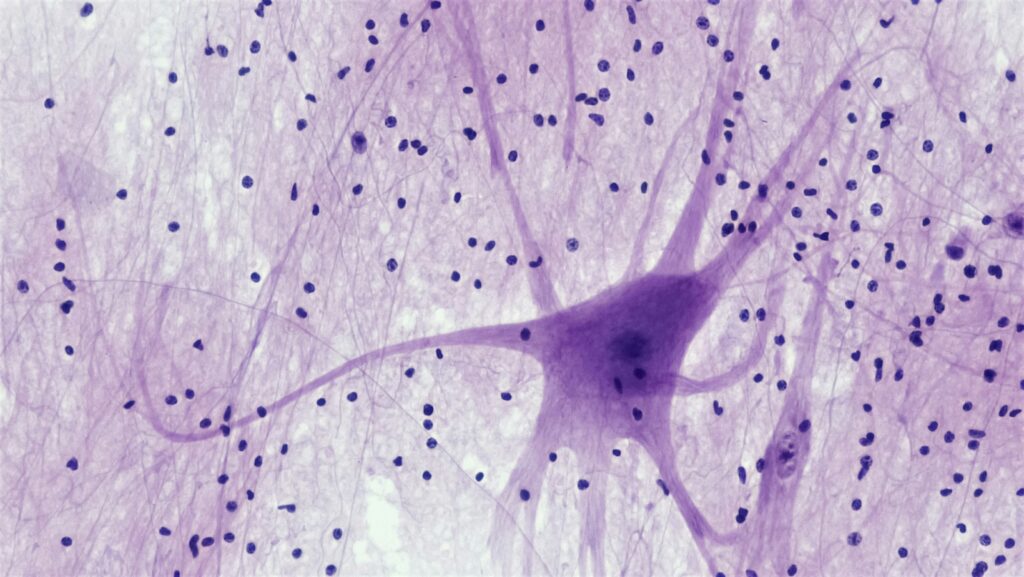
Dendrites, which mean “branches” in Latin, are extensions at the beginning part of the neuron that receive signals (e.g., smell) from the environment; they are attached to the soma (i.e., cell body), which is the living portion of a neuron. Until a threshold level of charge is reached, dendrites will not fire an electrical signal and will be at rest at -70 millivolts (mV). When a signal is fired and does reach the threshold at -55 mV, the axon hillock (i.e., the shoulder portion of a neuron) will release an electrical signal down the axon. The axon is a wiry limb of the neuron that converts the signals from the dendrites into electricity; the traveling of an electrical signal down an axon is called an impulse.
Axons need a conductive covering so the electricity they are propelled with does not escape; this protective layer of cells is called the myelin sheath, which surrounds specialized, long neurons. There are gaps between the myelin sheaths on an axon called the nodes of Ranvier, which renew and accelerate the electrical signals so they can travel quickly. This rapid transmission is critical for messages that need to travel down long distances, such as from the spinal cord to the toes. Here, myelin sheaths ensure that the electrical signals from the beginning are quickly transmitted to the receiving neuron and not weakened. However, with CIDP, this is no longer the case, as the myelin sheaths are attacked and cannot ensure that the electrical signals are being transferred from one neuron to the other in a successive manner.
Scientists believe the immune system is viewing the myelin sheath as a foreign invader (i.e., a pathogen) and is attacking it. As mentioned earlier, when the myelin sheath is damaged or removed, the electrical signals from the brain are not able to travel to the rest of the body, especially to the hands and feet. CIDP can happen at any age and is twice as common in males as females. Like GBS, its cause remains unknown and is neither hereditary nor contagious; it is often comorbid with diabetes. 1.9–7.7 per 100,000 people have CIDP worldwide, making it a very rare disorder; its onset can occur years prior to diagnosis. It is important for CIDP to be caught and treated early, as 30% of untreated cases have progressed into wheelchair dependence. Remission is possible for CIDP, but relapses are still expected.
Unlike CIDP, reaching severity in GBS is more rapid, making it an acute autoimmune neuropathological condition. In contrast, CIDP’s onset and time to severity are more gradual, categorizing it as a chronic autoimmune neuropathological disease. In fact, it can take years for CIDP to become detectable, whereas GBS can take only a few weeks to fully develop.
Symptoms
GBS and CIDP have several distinct features neurologists use to diagnose them.
GBS: symptoms emerge within the first three weeks of infection and worsen over time. After the fourth week, symptoms typically remain stable and do not degrade further. Due to its fast nature, the condition can rapidly lead to full-body paralysis.
- back pain
- pins-and-needles sensation
- difficulty with bladder control, breathing, swallowing, chewing, speaking, balance, and coordination
- digestive problems
- abnormal heart rate or blood pressure
- muscle weakness in the eyes and face
- tendon reflex degradation
CIDP: symptoms are much more progressive and harder to detect in its earlier stages.
- fatigue
- double vision
- loss of reflexes and sensation in the hands and legs, resulting in balance and coordination weakness (e.g., frequent falls)
- tingling and numbness in the body’s lower and upper extremities
- difficulty swallowing
Underlying Symptom: Cognitive Impairment
Since the peripheral nerves are attacked in GBS and CIDP, cognitive impairment is common in both conditions. In one clinical study, patients with CIDP were compared with controls to measure their cognitive functioning. The CIDP group reported reduced processing speed, executive functioning, and memory performance, along with sensorimotor impairment. Damage to the axon may contribute to this decline, as the brain is not able to carry out the electrical signaling necessary for these pathways. For GBS patients, hypoxia (i.e., oxygen deprivation) may occur if the body undergoes complete paralysis; this can be dangerous if oxygen is not reaching the brain for an extended period of time, thus leading to cognitive impairment. Furthermore, GBS can affect the autonomic nervous system, which, as the name suggests, impacts the body’s autonomic processes (e.g., breathing); this is called dysautonomia. In turn, a person can experience significant drops in blood pressure, meaning the brain is not getting enough blood; this can cause a person to be in a state of confusion or encephalopathy (i.e., a general term for brain dysfunction affecting mental state and cognitive function).
Diagnosing GBS and CIDP
Apart from the aforementioned symptoms, neurologists can perform a variety of tests to diagnose patients with GBS or CIDP. They can be diagnosed using nerve conduction and electromyography tests to detect demyelinating neuropathy by sending electrical signals through nerves, a spinal tap (aka lumbar puncture), which examines elevated protein levels within a normal cell count by inserting a needle in the lower back to collect cerebrospinal fluid, and blood and urine tests to rule out other neuropathological conditions and check for the presence of unusual proteins. Again, early detection is strongly encouraged, especially for CIDP, whose symptoms are gradual and long-lasting.
Treatment
Despite these conditions’ autoimmune nature, there are treatment options available for patients with both GBS and CIDP:
Intravenous Immune Globulins (IVIG): an IVIG, which contains antibodies extracted from the plasma of healthy donors, is administered into the patient’s vein (intravenous) or fatty tissue (subcutaneous) over the course of several hours. The cost of this treatment can range from $100 to $350 per gram, varying from patient to patient depending on the person’s age, weight, IVIG brand, number of infusions, and injection method. Patients will need frequent IVIG injections, as their effects only last a few weeks.
Disadvantage: although IVIG seems promising, it can lead to encephalopathy in rare cases. For that reason, it is always important to consult with your medical provider about the advantages and disadvantages of each treatment option.
Plasma Exchange (PE): a procedure in which the patient’s plasma is removed from their blood. The plasma-depleted blood is then reinserted into the patient. This procedure is performed because the plasma is believed to contain harmful antibodies that need to be removed.
Physical Therapy: patients can learn new exercise techniques to regain strength in muscles that have weakened or lost sensation.
Steroids (aka corticosteroids): this treatment is only used for CIDP, not GBS, since it is not helpful for the latter. Corticosteroids are used to improve strength lost in patients with CIDP due to their anti-inflammatory properties, and are often an inexpensive initial form of treatment.
Cyclophosphamide: if none of the above treatments work, patients may undergo cyclophosphamide, an immunosuppressive chemotherapy medication used to treat cancer. It works by stopping the immune system from attacking the peripheral nerves.
If you are considering treatment for GBS or CIDP, it is crucial that you consult with your medical provider about which treatment is best suited for your needs and symptoms. Not every treatment is best for everyone, which is why it is important to be proactive, especially if you are still in the earlier stages of your condition.
Spread the Information!
In honor of those experiencing GBS and CIDP, I would like to encourage you to inform yourself about these conditions, especially if you or someone you know is experiencing them. Even though these conditions are quite rare, they still exist and can significantly impact one’s quality of life. They can also often be misunderstood, as they resemble other common illnesses such as ALS or MS. For that reason, if you are able, it would be helpful to stay up to date about these conditions and spread the information you learn with others. That way, better understanding and treatment options could become available for these autoimmune conditions.
Sources:
- Guillain-Barre Syndrome (GBS) & Chronic Inflammatory Demyelinating Polyneuropathy (CIDP) | University of Michigan Health
- GBS vs. CIDP: What is the Difference? | Ameripharma
- Chronic Inflammatory Demyelinating Polyneuropathy (CIDP) is a rare disorder of the peripheral nerves characterized by gradually increasing sensory loss and weakness associated with loss of reflexes | CIDP/GBS Foundation International
- GBS and CIDP | Soleo Health
- Cyclophosphamide | AmeriPharma
- Cognitive impairment in chronic inflammatory demyelinating polyneuropathy | PMC
- Guillain-Barré Syndrome | American Brain Foundation
- Altered mental status in “Guillain‐Barré syndrome” – a noteworthy clinical clue | PMC
- What is a neuron? | Queensland Brain Institute