

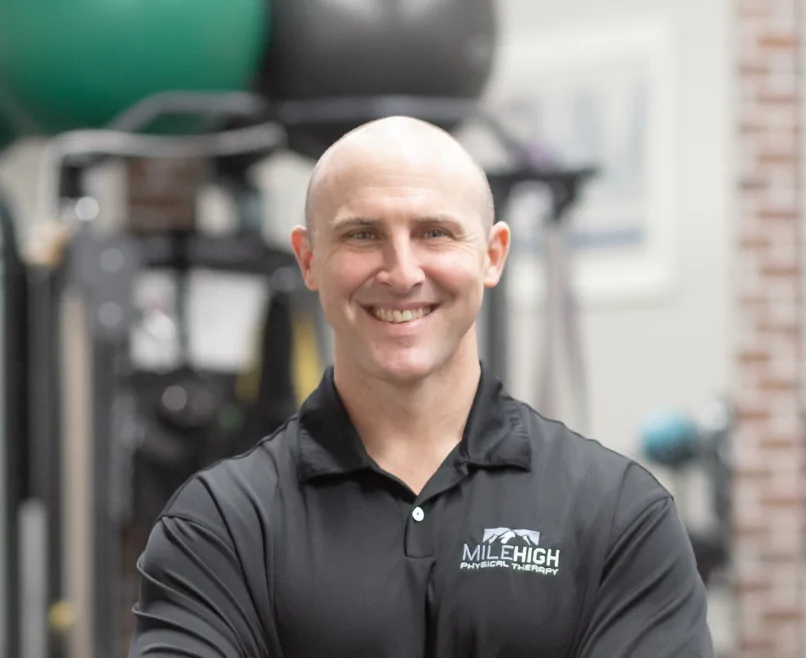
For Eric Stivers, becoming a physical therapist was not a straightforward path, but rather the result of an epiphany that came at the right moment.
Originally a chemistry major in college, Eric knew he wanted to pursue something in science, but he was still searching for his right fit. As a lifelong athlete, he had always been drawn to movement, exercise, and the way the body functions. Although he initially considered physical therapy, he moved away from it and continued on the chemistry track. However, this all changed one day while he was at the gym working out. In between sets, he had a moment of clarity and realized that chemistry was not the path he wanted to follow. He switched back to pursuing physical therapy, choosing a career that aligned more closely with both his interests and his sense of purpose.
Now a Doctor of Physical Therapy (DPT) with an Orthopedic Clinical Specialist (OCS) certification, Eric has spent the past 17 years working closely with patients to help them regain strength and return to their daily lives. His approach goes beyond treating injuries. He focuses on helping people reconnect with the activities that bring them meaning, whether that is playing a sport, traveling, or simply maintaining independence.
Eric’s connection to Conversations to Remember is a personal one. Through his relationship with the Lefkowitz family, whom he has treated for over a decade at Mile High Physical Therapy, he has seen the organization grow from its early stages into a meaningful source of connection for older adults. Inspired by their work, he has remained a consistent supporter, contributing as a donor and offering help whenever he can.
Throughout his career, Eric has worked with a wide range of patients, but he finds himself especially drawn to older adults. While many might expect him to focus on athletes, given his background, he has developed a deep appreciation for the geriatric population, a “soft spot” as he describes it. He recognizes that for many older adults, physical therapy is not just about recovery. It is often one of the few consistent opportunities they have to stay active, leave their homes, and engage with others; Eric enjoys the fact that he is able to contribute to multiple aspects of the older adults’ health by working with them.
When reflecting on what has stayed with him most over the years, Eric points to the determination of his patients. One experience that stands out is a man in his mid-70s who came to therapy with a severe shoulder injury just months before he planned to sail around the world with his wife. The rehabilitation process was difficult and painful, but the patient remained committed. Eric worked closely with him throughout his recovery, and after the trip, the patient returned to share that he had successfully completed the journey. “It was awesome to help him get back to doing those things,” Eric shared. Moments like this reinforce the impact of the work Eric does every day.
What continues to motivate Eric is seeing the long-term outcomes of his care. He often runs into former patients in the community who are back to doing the activities they love. Others refer family members to him, which he sees as one of the highest forms of trust. For Eric, these moments serve as reminders that his work extends far beyond the clinic. He also recognizes that physical therapy involves more than physical recovery. Many patients face frustration, uncertainty, and long rehabilitation timelines, especially after surgery. In these situations, Eric often steps into a supportive role, helping patients stay motivated and confident in their progress. Building that trust and helping patients believe in their ability to recover is a key part of his work.
For Eric, physical therapy stands out as a profession because of the relationships it allows him to build. Seeing patients multiple times a week over several months creates a unique bond, as he becomes part of their routine and, in many cases, part of their lives. Patients share their progress, their challenges, and even bring their families into his care. As Eric describes, “You become a part of their lives, and there’s no other area of medicine that you get to do that to that extent.”
At its core, Eric’s work is about helping people maintain and improve their quality of life. Whether he is supporting an older adult in staying independent or guiding a younger athlete through post-injury recovery, his goal remains the same. He wants every patient to leave therapy feeling stronger, more confident, and able to return to what matters most to them.