

As global populations age, understanding the factors that promote well-being in later life has become a pressing public health priority. While medical care and physical health remain essential, a growing body of research highlights the powerful role of psychosocial and lifestyle factors in shaping how older adults experience aging. Among these factors, holidays, frequent travel, and social activities have emerged as surprisingly strong predictors of well-being in elderly individuals because they support cognitive health, emotional regulation, and social connectedness which help with healthy aging.
Well-being in older age is a multidimensional concept encompassing emotional satisfaction, cognitive functioning, social integration, and a sense of purpose. According to the World Health Organization, healthy aging is not defined solely by the absence of disease, but by the maintenance of functional ability that enables well-being throughout the life course. Holidays and travel often combine three essential elements that are particularly potent contributors to quality of life in later years: novelty, social interaction, and autonomy.
Novelty and Cognitive Simulation
From a cognitive standpoint, travel exposes older adults to new environments, routines, and challenges. Navigating unfamiliar places, learning new cultural norms, and planning an itinerary require active engagement of attention, memory, and executive functioning. These mental demands stimulate neural pathways that might otherwise be underutilized in highly routine daily life.
Research in cognitive aging suggests that sustained mental stimulation supports cognitive reserve – the brain’s ability to compensate for age-related changes. Engaging in novel experiences, such as visiting new destinations or participating in organized holiday activities, may help slow cognitive decline by continuously challenging the brain.
Holidays are often emotionally salient experiences, and emotional arousal is known to enhance memory encoding. Positive emotional experiences, such as shared meals, scenic views, or meaningful conversations, are more likely to be remembered and revisited mentally. For seniors, recalling pleasant travel memories can serve as a psychological resource, reinforcing positive self-identity and life satisfaction long after the holiday has ended.
Social Interaction and Shared Experiences
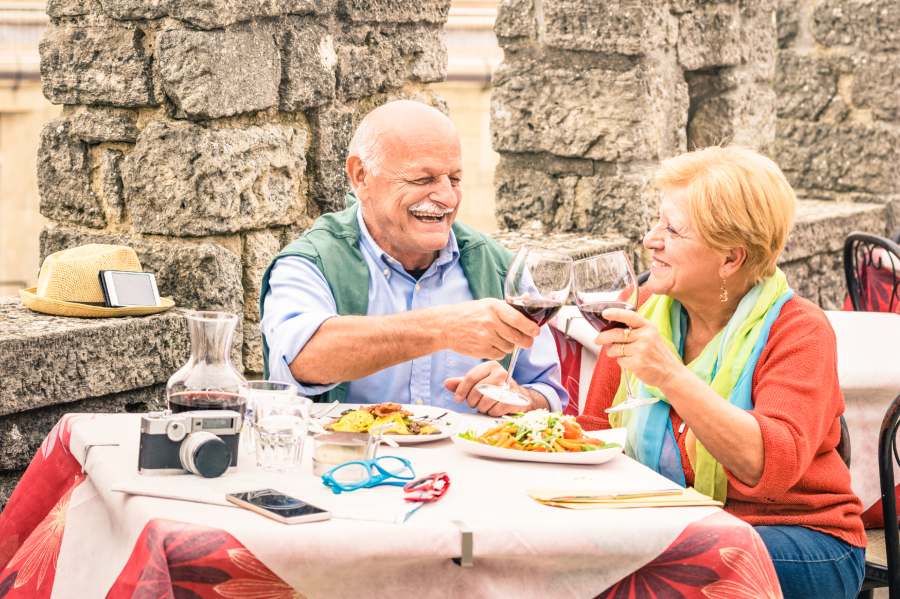
Social isolation is one of the most significant risk factors for poor mental health in older adults. Loneliness has been linked to depression, accelerated cognitive decline, and increased mortality risk. To combat this issue, holidays and travel often provide structured opportunities for social interaction, whether through family gatherings, group tours, or community-based activities.
Even temporary increases in social contact can have lasting effects. Social engagement stimulates language processing, emotional recognition, and perspective-taking, which are cognitive processes that benefit from regular use. In this way, social holidays serve as both emotional and cognitive interventions.
Cognitively, humans derive meaning through shared narratives. Traveling with others or participating in holiday traditions allows older adults to reinforce social roles as grandparents, friends, or community members, which strengthens self-concept and emotional stability. These shared experiences support what psychologists refer to as “narrative identity,” helping seniors integrate past, present, and future in a coherent and satisfying way.
Sense of Control and Autonomy
Planning and participating in holidays can enhance perceived autonomy, an essential psychological need that often diminishes with age due to health limitations or dependence on caregivers. Choosing where to go, what to do, and how to spend one’s time reinforces a sense of agency, which is strongly linked to higher life satisfaction and lower depressive symptoms.
Holidays also offer a break from daily stressors, including health concerns, caregiving responsibilities, or monotonous routines. Reduced stress allows for better emotional regulation, which is particularly important in older adulthood when coping resources may be strained. Positive leisure experiences can recalibrate emotional baselines, making individuals more resilient upon returning to everyday life.
Implications for Policy and Care Practices
Understanding the correlation between holidays and senior well-being has practical implications. Policymakers, healthcare providers, and caregivers can support healthy aging by:
- Encouraging social tourism and age-friendly travel programs
- Designing community-based holiday activities for seniors with limited mobility
- Recognizing leisure and travel as preventive mental health strategies
Sources:
- Cognitive Decline and the Holidays: How to Support Loved Ones With Dementia | UFHealth Norman Fixel Institute for Neurological Diseases
- Healthy ageing and functional ability | World Health Organization
- Loss of independence: Impacts and prevention | Québec Santé Montérégie Portal
- Neuroplasticity: The Brain’s Ability to Adapt and Change | San Jose Mental Health
- New research explores what makes emotional memories stick | The University of Chicago
- New Studies Suggest Social Isolation Is a Risk Factor for Dementia in Older Adults, Point to Ways to Reduce Risk | Johns Hopkins Medicine